I don't like the device, only one key fits in it, so don't reserve keys in it possible
. the app is a drama Chinese - poorly translated -
I have been using the Masterlock 5440 or 5441 for more than 7 years, which can be opened and closed remotely by my Master with the Masterlock app, temporary access for cleaning, etc.
There is new AI assistant - you run a gateway on your hardware, message it using Whatsapp or some other chat, it uses external AI to think, but is free to run local commands at it can even code its own tools.
It can also actively message you not only respond to your commands.
Now imagine the possibilities - from giving you orders, controlling toys, up to electromechanical locks...
🌫️ The Velvet Protocol A conspiracy‑theory short story inspired by BambiSleep‑style aesthetics
Nobody remembered exactly when the rumors began. Some said it started on fringe forums, others whispered it came from encrypted voice notes drifting through the darknet like digital sirens. But by the time the world tipped into its current chaos—economic spirals, political fractures, climate delirium—the whispers had already grown into a global hum.
They called it The Velvet Protocol.
According to the conspiracy theorists, it was the real reason behind the sudden flood of soft‑spoken influencers, the rise of “mindful femininity” apps, and the uncanny popularity of those dreamy, looping audios that promised relaxation, surrender, transformation.
Nobody could prove the Protocol existed, but the idea spread faster than any fact ever could.
The theory went like this:
Somewhere behind the curtain of collapsing institutions, a coalition of psychologists, technologists, and cultural engineers had decided that humanity’s aggression had reached its limit. Wars, riots, polarization—everything was spiraling. So the Protocol’s architects supposedly designed a global initiative to “soften” society. Not through force, but through ambient influence. Through aesthetics. Through suggestion. Through the quiet reshaping of identity.
The conspiracy boards insisted that the plan wasn’t about domination. It was about pacification.
A worldwide drift toward gentleness.
Toward softness.
Toward femininity.
People pointed to the signs:
Fashion shifting toward fluid silhouettes
Ads filled with pastel serenity
Meditation apps using voices that sounded suspiciously like BambiSleep derivatives
The sudden normalization of men wearing eyeliner on morning talk shows
None of it proved anything. But together, it felt like a pattern.
Some believed the Protocol was benevolent.
Some believed it was sinister.
Most simply felt the world changing under their feet, and didn’t know what to call it.
The strangest part was how many people seemed… receptive.
Not controlled, not coerced—just drawn to the softness.
Drawn to the idea of letting go of the hardness the world had demanded for so long.
Drawn to the fantasy of becoming someone lighter, smoother, more fluid, more free.
In the story’s world, the madness of the era—disinformation, economic collapse, climate anxiety—made people crave escape. And the Velvet Protocol, real or imagined, offered a direction:
a collective exhale into something gentler.
Whether the Protocol existed didn’t matter anymore.
People were already transforming themselves.
Voluntarily.
Curiously.
Sensually, in a quiet, internal way—like slipping into a dream they weren’t sure they wanted to wake from.
And somewhere in the background, the soft loops kept playing.
Not commanding.
Just inviting. “Relax… let go… become who you were always meant to be…”
The Velvet Protocol Expanded
The rumor had become a culture. The Protocol—real, imagined, or somewhere in between—had braided itself into daily life. It was less a law than a mood, less a mandate than a contagion of taste. People spoke of it like weather: something you felt on your skin before you could name it.
City Vignettes Seoul
A subway car hummed with pastel light. Commuters scrolled through feeds of slow‑spoken narrators who promised calm. A young man in a thrifted silk shirt tapped his earbud and smiled, not because the world had softened, but because he wanted to. He had signed up for a weekend workshop called Gentle Forms—a voluntary retreat where participants practiced voice modulation, posture, and the art of being seen as delicate without losing their edges. Lagos
Street vendors sold hand‑dyed scarves with tiny embroidered moths—the Protocol’s unofficial emblem. A radio host joked about the “velvet wave,” then read a listener letter about how adopting softer language had helped a family stop shouting at dinner. The host laughed, then paused, and the laughter softened into something like wonder. Buenos Aires
An underground zine printed manifestos and recipes for calming teas. Its editor, a former political organizer, wrote about the Protocol as a mirror: a movement that reflected what people already wanted—less violence, more care. She warned against erasing power, but she also admitted she sometimes put on a ribbon and felt lighter for it.
Institutions and Industry Apps and Algorithms
Startups marketed micro‑rituals: five‑minute breathing sequences, voice filters that softened consonants, playlists of whispered affirmations. Algorithms learned which tones made users linger. The companies insisted their products were about wellness. Critics called them cultural engineering. Both were true in different ways. Academies and Retreats
Private academies taught embodied gentleness—courses in gait, intonation, and wardrobe as performance. Enrollment required consent forms and a code of ethics. Graduates returned to their lives with new habits: a slower laugh, a practiced tilt of the head, a wardrobe that favored drape over armor. For many, it felt like learning a language that allowed them to speak without shouting. Fashion and Commerce
Design houses released lines labeled Aftershock and Soft Protocol. Men’s magazines ran features on “the new silhouette,” and small boutiques sold corsages for anyone who wanted to wear one. The market responded to desire and manufactured more of it; the two fed each other until it was hard to tell which came first.
Cultural Rituals The Evening Loop
Every night, millions tuned into short, looping audios—soft voices, rain sounds, the rustle of silk. People called them loops or bambi tracks. They were not hypnotic commands but invitations: to breathe, to imagine, to try on a different cadence. Couples listened together. Strangers on trains shared earbuds. The loops became a private public ritual. The Ribbon Days
Communities adopted small, consensual markers: a ribbon tied at the wrist, a pastel pin, a shared phrase. These markers signaled openness to gentleness, not submission. They were a way to say, I am trying this on; I am choosing this today.
Voices of Dissent
Not everyone welcomed the drift. Some saw the Protocol as erasure—an aesthetic that smoothed away anger and obscured injustice. Activists argued that softness could be weaponized to silence dissent, that gentleness without structural change was a balm for the powerful.
A podcast called Hard Lines collected testimonies: a teacher who felt pressured to adopt new language policies, a factory worker who found the new dress codes impractical, a politician who used the rhetoric of softness to deflect accountability. The podcast did not deny the comfort many found in the movement; it insisted on asking who benefited and who paid the cost.
Personal Stories Maya
A nurse who had worked double shifts during the worst of the crises, Maya discovered the loops on a night when she could not sleep. The voice in the track did not promise salvation. It offered a small, steady cadence: Breathe. You are allowed to be soft. She began to practice a gentler tone with patients, and found that it opened doors—people who had been defensive became more talkative, more willing to let someone in. For Maya, the Protocol was a tool she wielded with care. Jonas
A former drill sergeant, Jonas resisted at first. He mocked the scarves and the playlists. Then his daughter asked him to attend a community workshop so she would not be alone. He went, reluctantly, and learned to sit with silence. He did not become someone else overnight. He kept his blunt humor. But he learned to listen in a way that felt new to him. He called it a truce with himself.
The Conspiracy Mindset
The Protocol’s conspiracists loved ambiguity. They collected coincidences: a government grant for “emotional literacy,” a celebrity’s sudden wardrobe pivot, a leaked memo about “soft power initiatives.” They wove these threads into a tapestry that made sense of a chaotic world. For them, the Protocol explained everything: the rise of certain aesthetics, the decline of old certainties, the strange comfort people found in surrendering to gentleness.
The movement’s believers and skeptics both fed the myth. The more people debated it, the more it felt real.
Aesthetic Language
Across the world, a new lexicon emerged. Words like surrender, softening, embodiment, and velvet moved from niche blogs into mainstream headlines. People used them to describe everything from fashion to diplomacy. The language itself was part of the Protocol’s power: it reframed aggression as exhaustion and gentleness as a strategy.
The Ethics of Choice
The story never lost sight of consent. The Protocol’s most dangerous form was when choice was obscured—when social pressure made voluntary acts feel compulsory. The narrative explored that tension: how a movement that began as personal exploration could become a social expectation.
Characters in the world negotiated boundaries constantly. Some embraced the aesthetic as liberation. Others resisted it as conformity. Most lived somewhere in between, choosing softness in some rooms and steel in others.
Epilogue
Years later, historians would argue about the Velvet Protocol the way they argued about other cultural shifts: Was it orchestrated or emergent? A plan or a pattern? The truth, as always, was messy. The Protocol had been a mirror and a map. It reflected what people wanted and offered a route toward it.
In quiet moments, people still listened to the loops. They still tied ribbons on their wrists. They still argued on podcasts and marched in the streets. The world had not become uniformly gentle, nor had it become uniformly cruel. It had become more complicated—softer in some places, harder in others, and always, insistently, human.
A child once asked Maya why people liked the loops so much. She thought for a long time and answered simply: “Because sometimes the world asks us to be loud, and sometimes we need permission to be small.”
The Leak
Months after the Ribbon Days and the Evening Loops became ordinary, a file surfaced on an obscure mirror site. It was small, unsigned, and written in a tone that mixed clinical distance with a kind of weary idealism. People called it the Velvet Annex. Conspiracy forums devoured it. Mainstream outlets summarized it. Artists turned lines from it into posters.
The Annex did not prove a global cabal. It did not need to. It read like a policy paper written by people who had once believed in large solutions: soft power as social stabilizer; affective literacy as public health; cultural nudges as harm reduction. Its language was careful, full of qualifiers and pilot studies. It proposed incentives, not edicts. It recommended funding for emotional education, for media that modeled gentleness, for public spaces designed to reduce escalation.
For some, the Annex was vindication. For others, it was proof of manipulation. For almost everyone, it was another mirror: a document that reflected the anxieties of a world trying to stop burning.
The Underground and the Salon
The leak birthed two new kinds of gatherings.
In basements and backrooms, the Underground met to parse the Annex line by line. They were a ragged coalition—hackers, retired diplomats, baristas—who wanted to map influence networks and trace funding flows. Their meetings were loud and urgent, full of whiteboards and late‑night pizza. They believed transparency would inoculate society against subtle coercion.
Across town, in sunlit rooms with plants and mismatched chairs, the Salon convened. Its members read the Annex aloud, then practiced the very techniques it described: soft intonation, deliberate pauses, ritualized greetings. They argued that if the Annex contained tools, those tools could be repurposed for care. They taught each other how to hold grief without weaponizing it, how to speak firmness without raising a voice.
Both groups accused the other of missing the point. Both were right in different ways.
The Festival of Ribbons
A year into the Protocol’s cultural season, a city declared a public holiday: The Festival of Ribbons. It was a messy, joyful thing. People tied ribbons to lampposts and bicycles, to the wrists of strangers and the collars of dogs. There were booths offering voice workshops and booths offering legal advice. There were debates on stages and lullaby choirs in alleys.
The festival’s most photographed moment was a silent procession: people walking slowly through the main square, each carrying a small lamp. They did not march for a policy or a party. They walked to practice presence. Cameras captured the softness and turned it into a thousand different narratives—some celebratory, some suspicious, some wistful.
Maya watched the procession from a hospital rooftop. She had worked through the worst of the crises and had learned to measure small mercies. The procession did not solve the structural problems she treated every day, but it reminded her that people could choose gentleness even when the world demanded hardness.
The Backlash
Not all responses were performative. In factories and council chambers, in classrooms and courtrooms, the Protocol’s aesthetics collided with practical life. Dress codes meant for safety clashed with flowing silhouettes. Communication guidelines intended to reduce escalation were misapplied to silence whistleblowers. Employers who marketed “emotional wellness” sometimes used it to justify unpaid labor.
A coalition of workers and ethicists published a counter‑manual: Consent and Context. It argued that any cultural shift must be accompanied by structural protections—labor rights, privacy safeguards, and explicit consent protocols. The manual became required reading in some civic programs and a rallying cry in others.
The backlash sharpened the conversation. The Protocol could not be reduced to a single story. It was a set of practices, a market, a rumor, a comfort, and a risk. The world’s madness had not been cured; it had been refracted.
Jonas and the Choice
Jonas, who had once barked orders in training fields, found himself at a crossroads. His daughter had asked him to wear a ribbon to her recital. He had done it, awkwardly, and then kept it for a week. People noticed. Some teased him; others thanked him. He did not become someone else. He kept his old jokes and his old scars. But he also learned to let a pause sit between a question and an answer.
One evening, his old unit called him back for a reunion. The men there expected the same Jonas who had led drills. He arrived with the ribbon tucked into his jacket. At first, the room hummed with the old cadence—loud, fast, unyielding. Then someone asked him about the ribbon. He told the story of his daughter and the workshop and the way a softer tone had helped him listen to a neighbor in pain.
No one changed in that room that night. But a conversation began. It was small and imperfect and human. Jonas left with his ribbon still in his pocket and a new habit of listening for the spaces between words.
The Archive
Years later, scholars would collect artifacts: loops, ribbons, the Annex, the Consent and Context manual, protest signs, fashion spreads, and oral histories. They would not agree on a single narrative. Some would call the era a cultural correction; others would call it a commodified pacification. Some would celebrate the ways people learned to hold grief; others would catalog the ways aesthetics had been weaponized.
The archive’s most compelling entries were not the documents but the marginalia—the notes in the margins of zines, the letters left on café tables, the recordings of people teaching each other how to breathe. Those margins revealed the human work beneath the spectacle: the negotiations, the small acts of care, the refusals, the experiments.
In the end, the Velvet Protocol—if it had ever been a single thing—became a thousand small things. It was a rumor that taught people new words. It was a market that sold comfort. It was a set of practices that some used to heal and others used to hide. It was a question people kept asking each other: How do we soften without surrendering justice? How do we choose gentleness without making it compulsory?
Closing Image
On a late spring morning, Maya sat on a bench in a park where ribbons still fluttered in the trees. A child ran by, laughing, a ribbon trailing from their wrist. An old man fed pigeons nearby, his scarf a bright, defiant color. A group of teenagers argued loudly about a protest scheduled for the evening. The world around them was noisy and fragile and alive.
Maya closed her eyes and listened to the city breathe. The loops were still playing somewhere—on a phone, in a café, in a quiet apartment. They were invitations, not orders. People would accept some and refuse others. They would make mistakes. They would hold each other accountable. They would keep trying.
She opened her eyes and tied a ribbon to the bench rail, not as a declaration but as a question: a small, visible reminder that people could choose softness and still keep their edges.
Open Thread
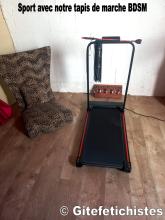
If sport isn't your cup of tea, thanks to BDSM there's a way to make it more enjoyable and motivating with Master TSM as your coach!
This post is about reality. It's possible to experience all this during a week.
Food control = You will forget about McDonald's and ready meals and switch to good organic fruit and vegetables.
MEANS OF COERCION (Laughter --> motivation through BDSM)
Definition of coercion: coercion is the use of force, threats, violence or pressure to compel a person to act in a certain way, often against their will. It exists in particular through physical or psychological coercion.
While there is no actual violence at the fetishist lodge, there are:
Whips
Canes
Spanking
Clamps
Slimming and/or athletic bondage
BDSM accessories
Blackmail (optional and depending on profiles)
CAUTION AND SAFETY
The programme is tailored to each individual, including those with health concerns.
AUDIENCE
All audiences: couples / men / women / transvestites / transsexuals / others.
LOCATION A fetish lodge in the countryside near Zaragoza, Spain. Private air-conditioned flat with Wi-Fi.
Frequently asked questions:
- Is there sex?
No
- If I have a knee problem, will this be taken into account?
Yes
- I am diabetic, will this be taken into account?
Yes
- I have asthma, will this be taken into account?
Yes
- If I have BDSM restrictions, will this be taken into account?
Yes
- How many participants are there?
You and no one else (unless you are sharing with a friend).
Hi all, for all of you who were around in the late 80s and early 90s, we all knew that the ultra sexy and glamorous "super model" defined feminine beauty of that era.
I was a preteen then, and these women were my objects of fantasy (Vogue-era Madonna and Sharon Stone, too). Seeing them I'm sure contributed to by desire to wear women's clothing, although the seeds of that desire goes all the way back to 1983-84 (Dayton's and JC Penny catalogs...).
When I actually started having access to women's clothing, it coincided to my *ahem* "liberating" Cosmo magazines from the local library to take home and see the pictures of the gorgeous Super Models wearing incredibly sexy outfits. I would cut out the pictures I liked and put them in a folder hidden in the bottom-back of my desk. The smell of those perfumed magazine pages (remember when magazines soaked ad pages in perfume and cologne?) was intoxicating.
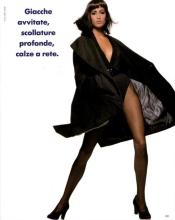
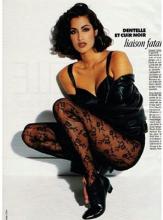
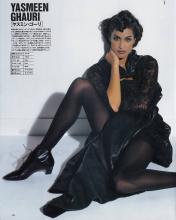
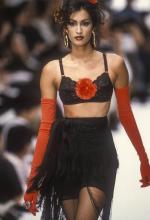
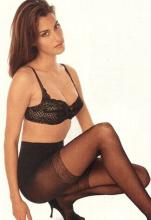
Claudia Schiffer, Cindy Crawford, Christy Turlington, Linda Evangelista, Naomi Campbell, Tatjana Patitz, Shalom Harlow, Yasmeen Gauri (my personal favorite), and others. They were all stunning beauties. Mysterious, statuesque, Amazons of allure, decked out in the most fine and exquisite high fashion outfits. Those long legs in high heels and lace top thigh high stockings from fine Italian brands...out-of-reach and sooo desirable...
I'm sure I somehow imagined I was one of them in all their feminine allure as I dressed up, getting so excitied as I did so. So confusing, too. Boys weren't supposed to dress up like girls and have these intense feelings as they did so. My legs in stockings looked like the legs I saw of them in the magazines, but in real life, and I could feel how good it felt to touch those legs, too. My body responded and, well, we all know what happens then...
So anyway, this is a meandering tribute to those women of that era, and how they possibly launched hundreds (thousands?) of young men into the thrilling adventure of crossdressing and discovering what wonderful secrets women kept from us in the form of their sexy, feminine clothing.
Did anyone else help get their start dressing up from these or other Super Models? Who was your favorite? Feel free to post a favorite picture of your early Super Model crush. I'd love to see who you admired and fantasized about!
These are some of my favorite Yasmeen looks from that period. The first one is a gif--click to see her in action. Enjoy!
Does anyone have any Female or TTS voiced Jock/Himbofication Hypnosis file recommendations? Preferably ones that include workout/diet encouragement and some kind of sexual encouragement. It doesn't matter if its dominant or submission focused.
I really enjoy rainwear. I love to wear it outside when it rains, With or without clothes underneath, and several layers of it.
Therefore i would like to ask you to create some dares for me to do. Make it exciting and daring. To this date, i have mostly been wearing it when it's dark outside and in the woods.
It would also be fun to combine it with some hidden bondage if possible.
Indoor dare
I would like some self bondage dares indoor as well. These can obviously be more extreme and contain more bondage. But feel free to make dares that combines everything.
Here is my list of equipment:
Feel free to recommend any rainwear or bondage equipment if there is something missing in my list. I always want to try something new.
Bondage equipment
Timer padlock
3 sets of steel handcuffs with double locks
Steel shackles for wrists and ankles.
Lockable leather hand and ankle cuffs.
Leather collar
Leather posture collar
Lots of chain and padlocks
Hogtie equipment
Prostate vibrator
Several buttplugs from small to huge
Inflateable buttplug
Buttplug with e-stim
Full body safety harness
Standard red ball gag harness/trainer
Mouth gag trainer from sub-shop.com
Sensory deprivation hood
Restriction mask? https://www.sub-shop.com/collections/all...re-trainer
Leather bondage mittens
Silicone ear plugs
Clothing
Pvc fishing overall with welded boots and gloves
Green chest high waders with integrated wellies
Green chest high waders with just "socks"
Blue biovinyl farmerrain jumpsuit / bib pants
Blue biovinyl farmerrain jacket
Red biovinyl farmerrain overall
Light green pvc overall
Pink Ilse Jacobsen Rain71 raincoat
Green wellies
Blue pvc maid dress
Elbow length black rubber chemical gloves
Blue rain mittens
Regatta thermo cruise life jacket
Normal lifejacket with 2x crotch straps
Neoprene wetsuit hood
Balaclava
Latex gasmask
Long pvc rain cape
Latex anatomical mask with nose tubes https://www.aliexpress.com/item/1005002629229118.html
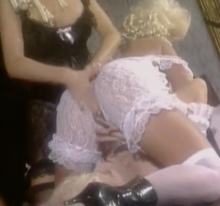
Hi, I'm looking for something like what the women in this classic 90s VCA Michael Ninn movie, "Divas 4: Sexual Aria", a favorite lesbian scene of mine for a long time. Two of the ladies wear them, one black and the other white. They seem to be of the same style.
Not sure what exactly you'd call this sort of lingerie, so the best I can come up with is "Floral lace onesie," or "boy shorts". It's not the best description, because it's also a one piece bodysuit, romper, teddy with legs, etc. This is what I've googled and searched for online with no luck. Perhaps they are a specific 90s item that's no longer available? I hope not.
Anyway, if someone can identify the item they're wearing and direct me to a source, I'd be very appreciative!!
Many evenings, I have to stream on a cam site from my Master
on the cam site https://chaturbate.com/b/latexslaafboy2/ in a full latex bondage suit, timer box, and gag.
My Master wants me to be tied up, powerless yet safe, and only be able to be released after the time has elapsed (or after additional time via tokens).
For this, I use a metal rod that I made myself. I had searched online for an extended version that could attach my feet, hands, and neck.
After finding a good example, as an engineer, I bought the necessary materials at a hardware store and made the next rod.
Imagine you are naked with handcuffs attached to your chastity cage.
A sadistic pervert (me or your partner) tells you that the keys to the handcuffs and your chastity cage are in a waterproof box at the bottom of a mud pool.
Well, this could happen to you if you like to play, because I've made a mud pool for people who come on holiday to the fetishist cottage.
Why build a mud pool?
- For dominant individuals who enjoy pushing their submissives to their limits outdoors.
- For fans of pig play.
- For fans of slightly crazy self-bondage or bondage walking.
Practical considerations
- The area is secluded, so no one can see the mud pool.
- There is a solar shower for washing outdoors after play.
In the photo, you can see the sadist (me) digging for you ?